Ultrasonic Cleaner
What is an ultrasonic cleaner?
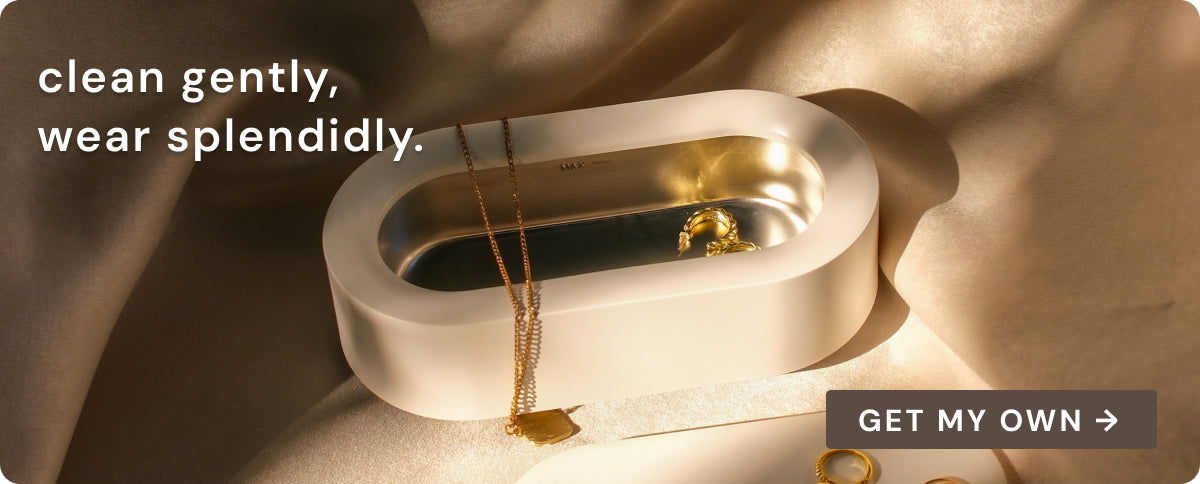
An ultrasonic cleaner is a device that uses ultrasonic waves to clean objects, typically small and intricate items such as jewelry, watches, dental tools, glasses and electronic parts. It is particularly valued for its ability to effectively remove contaminants from detailed and hard-to-reach crevices that many other cleaning methods cannot.
How does an ultrasonic jewelry cleaner work?
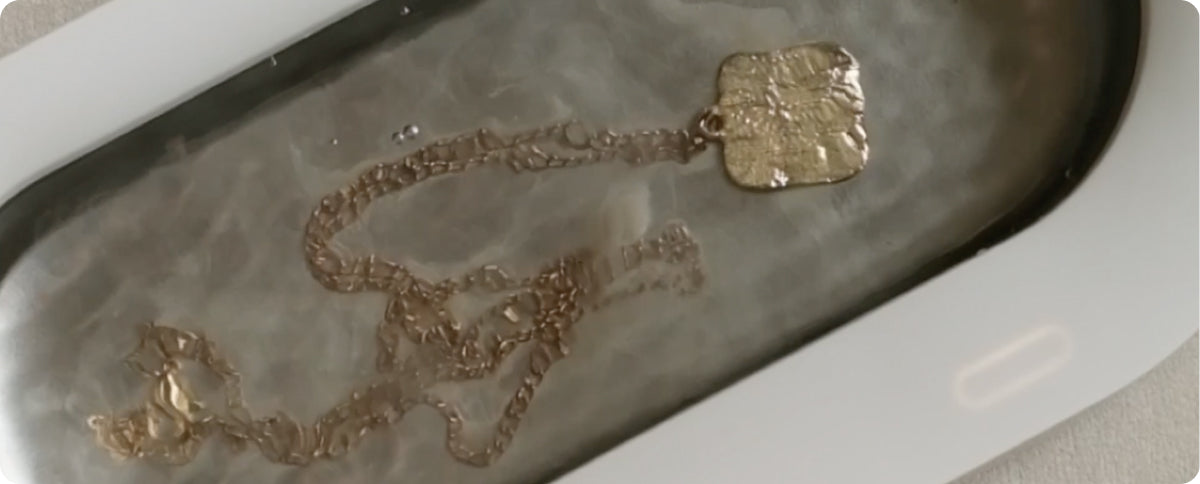
Ultrasonic jewelry cleaners work through a process called cavitation. Rapid changes in pressure produced by ultrasound creates micro “bubbles” in the cleaning solution. When these bubbles reach a critical size, they burst, releasing shockwaves and micro jets to dislodge dirt and other micro-contaminants from jewelry. It’s particularly useful for small, detailed jewelry pieces, providing a precise and gentle cleaning method.
How to use an ultrasonic jewelry cleaner?
- Add water to the tank
- Lather a cleaning solution on to jewelry (optional)
- Gently slide jewelry into tank
- Start the jewelry cleaner
- Repeat steps 2-4 until jewelry is clean
- After cycle, dry with a soft cloth
Does an ultrasonic cleaner really work?
Yes, most definitely. Ultrasonic cleaners have always been used in professions where cleanliness is of the utmost importance, such as in medical, dental and scientific fields. Ultrasonic cleaners are highly valued for their cleaning effectiveness, and the ability to clean several pieces at once.
What should I not clean in an ultrasonic jewelry cleaner?
There are four main categories:
- items that can be damaged with water
- items that are organic and porous, and
- items that are already chipped, scratched or damaged (referring to gems and glass)
- gemstones softer than 8 on the Mohs scale, treated gems and plated jewelry (gold vermeil in good condition is fine)
Most hard, non-porous materials (solid metals, ceramics, plastic etc.) can still be cleaned even if damaged. See a list of items you can’t clean in ultrasonic cleaners.
Can an ultrasonic cleaner damage my jewelry?
When used correctly, it’s one of the best ways to clean jewelry thoroughly. When used incorrectly, yes, it can damage your jewelry. Incorrect use includes non-waterproof materials (e.g. glued-on parts), organic or soft stones, color-treated or damaged gems, and plated pieces (gold vermeil in good condition is fine).
Does an ultrasonic cleaner really work with just water?
Yes, ultrasonic jewelry cleaners really work with just water. It’s the process of cavitation that does the cleaning, not the solution itself. Though, lathering a light cleaning solution on to jewelry before ultrasonic cleaning will help loosen contaminants to make cleaning time faster.
How to get the best clean out of an ultrasonic jewelry cleaner?
An ultrasonic clean with just water is already a thorough cleaning method. To get a better, faster clean, you can add dish soap or other gentler cleaning solutions to the jewelry before putting your jewelry in for a cycle.
Best ultrasonic jewelry cleaner?
The best ultrasonic cleaner for jewelry should be at 45,000Hz. The lower the hertz, the tougher the clean. For reference, cleaning for large automotive parts happens around 20,000 - 25,000 Hz. 45,000Hz is the gold standard for cleaning smaller, more delicate parts like jewelry. At this frequency, the cleaning is gentle, and the ultrasonic waves are at a size that are able to penetrate small holes and crevices more thoroughly.
Can ultrasonic cleaners remove tarnish?
Tarnish is caused by a chemical reaction between your jewelry and the air over time. Ultrasonic cleaners cannot reverse this chemical reaction, but it can improve its appearance. It is best to use ultrasonic jewelry cleaners to help prevent tarnish and to clear buildup before polishing. To lift light tarnish, finish with the Akua Sonic 2-in-1 Jewelry Care Cloth.
Do you need to use an ultrasonic jewelry cleaner solution?
No, it is not necessary to use a jewelry cleaner solution with your cleaner. However, cleaning solutions do help loosen debris and contaminants for a more thorough clean in a shorter time.
What can you clean in an ultrasonic cleaning machine?
So many things!
- Metals: solid gold, gold filled, gold vermeil, yellow gold, rose gold, white gold, silver, platinum, brass, bronze
- Hard gemstones (Mohs 8+): diamond, ruby, sapphire, moissanite, cubic zirconia
- Dental Tools: aligner, retainer, mouth guard, denture, toothbrush
- Glasses: reading glasses, sunglasses, safety glasses, dive goggles, swimming goggles
- Misc: water bottle mouth pieces, snorkels, makeup brushes
For more, check this what can you clean list.
Jewelry Cleaning
Can I clean my wedding ring in an ultrasonic jewelry cleaner?
Wedding rings are perfect for cleaning in ultrasonic jewelry cleaners. It’s fast, thorough and mess-free. Ultrasonic cleaners are particularly great at cleaning intricate designs and deep into small crevices. If your wedding ring has pearls or opals, skip the ultrasonic cleaner and clean the whole ring with the Akua Sonic Cleansing Foam Kit or Diamond Radiance Pen. Pearls and opals are soft and porous and need a gentler clean.
How to clean wedding ring in ultrasonic cleaner?
Cleaning wedding rings in ultrasonic cleaners is a game-changer to maintain your ring’s luster and longevity. Follow these steps after a particularly contaminant-heavy day (gym, beach, vacation, garden work etc.) or weekly for best practice.
- Check that your wedding ring materials are suitable for ultrasonic cleaning
- Add water to the ultrasonic cleaning tank
- Lather some gentle cleaning solution to your wedding ring (optional)
- Slide ring into the ultrasonic cleaner
- Start cleaning cycle
- Repeat steps 3-5 if needed
- After cycle, dry off with soft cloth
- Polish if needed
How do I clean my engagement ring in an ultrasonic cleaner?
Engagement rings, especially fancy ones with multiple stones and intricate designs, trap contaminants more than most rings. In these cases, the penetrative yet gentle cleaning provided by ultrasonic cleaners is the best way to purge all contamination.
Follow these steps after a particularly contaminant-heavy day (gym, beach, vacation, garden work etc.) or weekly for best practice.
- Check that your engagement ring materials are suitable for ultrasonic cleaning
- Add water to the ultrasonic cleaning tank
- Lather some gentle cleaning solution to your wedding ring (optional)
- Slide ring into the ultrasonic cleaner
- Start cleaning cycle
- Repeat steps 3-5 if needed
- After cycle, dry off with soft cloth
- Polish if needed
Can I clean my diamond ring in a jewelry cleaner?
Absolutely. Diamond rings are great to clean in ultrasonic jewelry cleaners.
Remember to double check that the stones are secure, there are no flaws in your diamond, and there are no other unsuitable materials (like pearls) on the rest of your ring.
Best way to clean engagement rings at home?
The most thorough way you can be cleaning engagement rings at home is with an ultrasonic cleaner. Devices like Akua Sonic Cleaner are used by jewelry makers and jewelry sellers worldwide to clean jewelry pieces and gemstones professionally.
Why is it better than DIY methods with baking soda, toothpaste and vinegar? Engagement rings are often intricate and complex, creating many minute crevices that attract build up. DIY methods are often surface level, chemically inconsistent and can be abrasive. Comparatively, ultrasonic cleaners can work with just water and provide a holistic precision cleanse.
What stones can I clean in an ultrasonic cleaner?
Hard, non-porous, untreated gemstones rated 8 or higher on the Mohs hardness scale can be cleaned in an ultrasonic jewelry cleaner. These include diamond, ruby, sapphire, moissanite and cubic zirconia, including lab-created stones. Softer stones such as amethyst, citrine and garnet are better cleaned with the Akua Sonic Cleansing Foam Kit or Diamond Radiance Pen.
How to clean gold rings in ultrasonic jewelry cleaner?
Gold rings are great for cleaning with ultrasonic cleaners. There is a common misconception that gold does not tarnish, when any gold alloy (22K down to 9K) will tarnish with bad maintenance. This is where ultrasonic jewelry cleaners come in handy for gold ring owners - it’s efficient, mess-free and thorough.
- Check that your ring materials other than gold are suitable for ultrasonic cleaning
- Add water to the ultrasonic cleaning tank
- Lather some cleaning solution to your ring (optional)
- Slide ring into the ultrasonic cleaner
- Start cleaning cycle
- Repeat steps 3-5 if needed
- After cycle, dry off with soft cloth
- Polish if needed
Can I clean my pearl earrings in an ultrasonic cleaner?
Pearls shouldn’t go in an ultrasonic cleaner, and because the pearl is attached to the earring, the whole piece should stay out. Clean pearl earrings with the Akua Sonic Cleansing Foam Kit or Diamond Radiance Pen instead.
Can rose gold engagement rings be cleaned in ultrasonic cleaners?
Definitely. All solid rose gold rings, whether 10K, 14K or 18K, can be cleaned in ultrasonic cleaners. It will not scratch or damage the metal. Double check that the gems and decoration materials on the ring are also suitable for ultrasonic cleaning.
Can I clean my opal engagement ring in an ultrasonic jewelry cleaner?
No. Opal is a soft, porous stone, whether it’s solid, a doublet or a triplet, and ultrasonic waves can crack its surface. Because the opal is set in the ring, clean the whole piece with the Akua Sonic Cleansing Foam Kit or Diamond Radiance Pen instead.
Can I clean vintage engagement rings in the Akua Sonic Cleaner?
The Akua Sonic Ultrasonic Cleaner is great for bringing shine back from vintage pieces. Many older engagement rings are quite detailed with lots of ridges and crevices. Jewelry Cleaners using ultrasound are experts with cleaning these finer details. Add a drop of liquid soap to the piece, then slide it into the ultrasonic cleaner for a cycle.
Take care to make sure the vintage engagement ring is fit to be cleaned in an ultrasonic cleaner: the stones are hard and secure, nothing is glued, there are no porous or treated stones, and gems are not already cracked or scratched. If you’re unsure, use the Akua Sonic Cleansing Foam Kit or have a jeweler check it first.
Best ultrasonic jewelry cleaner to clean silver jewelry?
The best ultrasonic cleaner to clean silver jewelry is one that operates at 45,000Hz, is optimized for ease of use, and one that you will want to use often. No pressure, but Akua Sonic Cleaner seems to fit the bill 😉.
Frequency of 45,000Hz is strategic in that it is gentle enough to not damage delicate jewelry, but still thorough enough for a penetrative deep clean. While a machine that is easy to use and makes you want to use it often sounds like banter, it is actually a key feature - as failing to clean regularly is the primary source of tarnish and jewelry degradation.
Is there a sterling silver jewelry cleaner?
There is no particular ultrasonic cleaner made for silver jewelry, just ones made for all jewelry. Be sure to choose one that is on the gentler side - 45,000Hz instead of 40,000Hz or lower. 40,000 Hz produces more aggressive ultrasound waves which can damage jewelry more easily. It’s recommended to use longer cycles with higher hertz, than shorter cycles on a lower hertz to prevent jewelry damage.
Other Cleaning
Can I clean my glasses in an ultrasonic jewelry cleaner?
Definitely! Whether your glasses are made of metal, plastic or glass, ultrasonic cleaners are the perfect cleaning method. They are already a staple in many optometrists and glasses stores. Do keep a look out for cracked lenses or scratched or damaged coatings, as ultrasound vibrations can make these worse.
Can I clean my mouthguard in an ultrasonic jewelry cleaner?
Absolutely. Ultrasonic cleaners aren’t just great for jewelry, but dental tools like mouthguards as well. It’s effective and efficient at lifting saliva, plaque and stains from regular use. To use, just fill the tank with water, add in your mouthguard, and run an ultrasonic cleaning cycle.
Can I clean my invisalign in an ultrasonic cleaner?
Yes, ultrasonic cleaners are great for cleaning invisaligns, thoroughly, frequently, and easily. The process of cavitation in ultrasonic cleaners is extremely good at removing contaminants (like gunk, plaque and stains) from aligners without damaging the item itself. It’s also refreshingly easy and mess-free - just run it for a 5 minute cycle in water!
How to clean makeup brush with an ultrasonic cleaner?
Makeup brushes can be a pain to clean given the brush density and heavy soiling. Ultrasonic cleaners make light work of cleaning thanks to the process of cavitation. It’s thorough, quick, and reaches deep into the bristles. Follow these steps for a thorough clean.
- Add water to the ultrasonic cleaning tank
- Lather a little baby shampoo onto the bristles (optional)
- Dip brush into the ultrasonic cleaner
- Start a 3-minute cycle
- Repeat steps 2-4 if needed
- After cycle, let brush dry completely before next use
Have more questions? Ask us at hello@akuasonic.com.